5 things to know about Reading Partners, need for volunteers
January 6, 2026
Originally posted on Tulsa World
1. Reading Partners, a nonprofit focused on one-on-one literacy tutoring for elementary school students, needs 250 volunteers for the upcoming semester to work with Union Public Schools students who are currently on a waiting list. “Once you really connect and break through with those children,” one volunteer says, “it’s an invaluable experience and it works both ways.”
2. Union Public Schools and Reading Partners are hoping to serve at least 720 students in 2025-26. The organization works with students at Boevers, Roy Clark, Darnaby, Jarman, Jefferson, McAuliffe, Moore, Ellen Ochoa, Rosa Parks and Peters elementary schools. The goal is to expand to all 13 elementary sites in 2026-27.
3. Reading Partners is a nonprofit national program — part of AmeriCorps — that receives two-thirds of its funding through private donations, with the rest from the federal government and local schools that sign up. Citing budgetary constraints tied to the sunsetting of federal COVID-19 relief money, Tulsa Public Schools ended its agreement with Reading Partners at the end of the 2024-25 school year. Some officials noted inconsistent buy-in for the program, which was serving 626 students, among individual school site leaders.
4. A Reading Partners tutoring session consists of not only reading a developmentally appropriate book with the student but also activities and simple games that hone in on the specific challenges the student is having with phonics, decoding or soundingout words from basic letter sounds, vocabulary words and comprehension.
5. Volunteers need no formal training, only the willingness to tutor in person at a local school or to tutor a local student in an online session if that is more convenient. The minimum age is 14, and volunteers must pass a criminal background check. Tutors can choose one or two one-hour tutoring sessions per week, with a variety of time slots available during school hours. To learn more or volunteer, go to readingpartners.org/volunteer or call 918-949-1979.
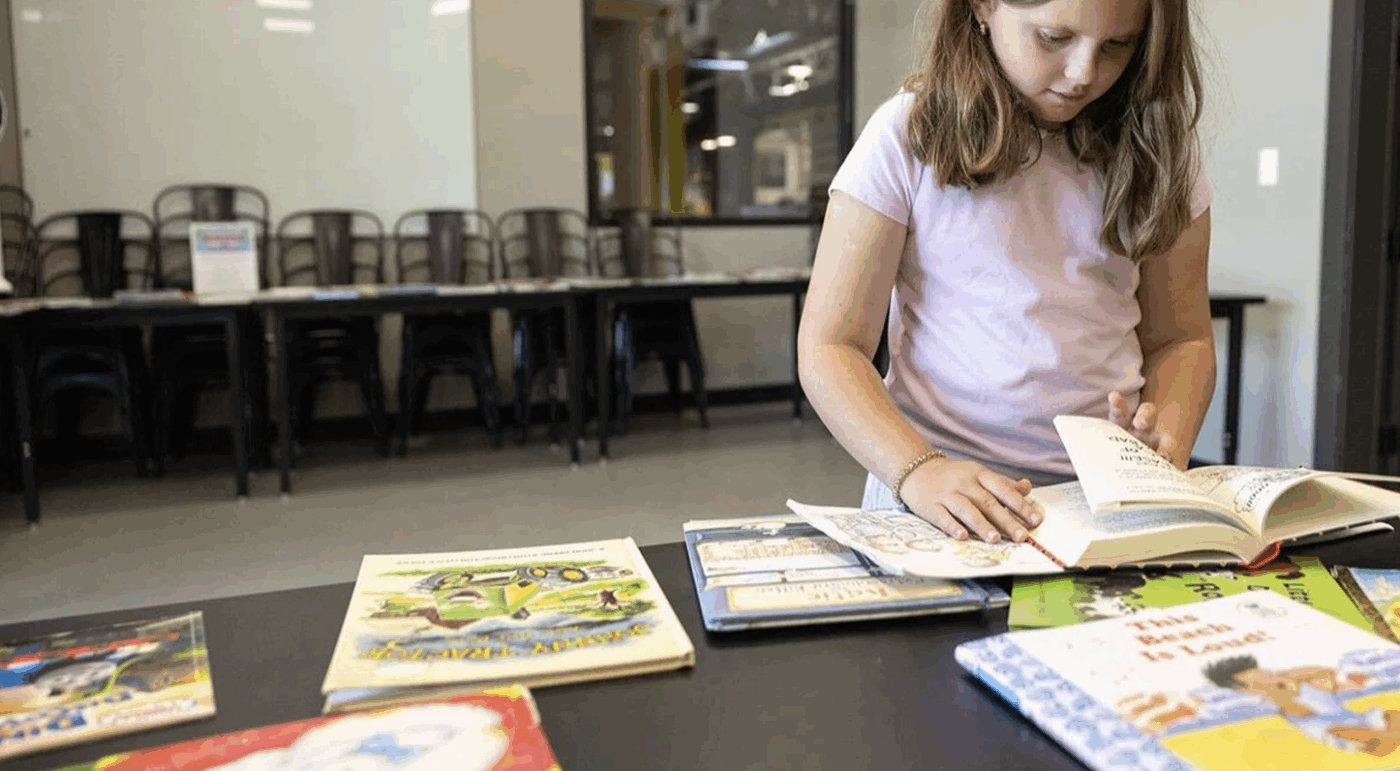
Image: Eva Lemaster, 6, is pictured in August at a Reading Partners book swap event. The program is expanding at Union Public Schools, where 250 students are on a waiting list for tutors, after Tulsa Public Schools ended its Reading Partners program in 2025.
Related News & Events
See All NewsMarch 6, 2026
Join us for The Next Chapter 2026

February 6, 2026
West tells Chicora students to focus on love